
By Jenn Cleary
Here it is. Your moment of utter solitude.
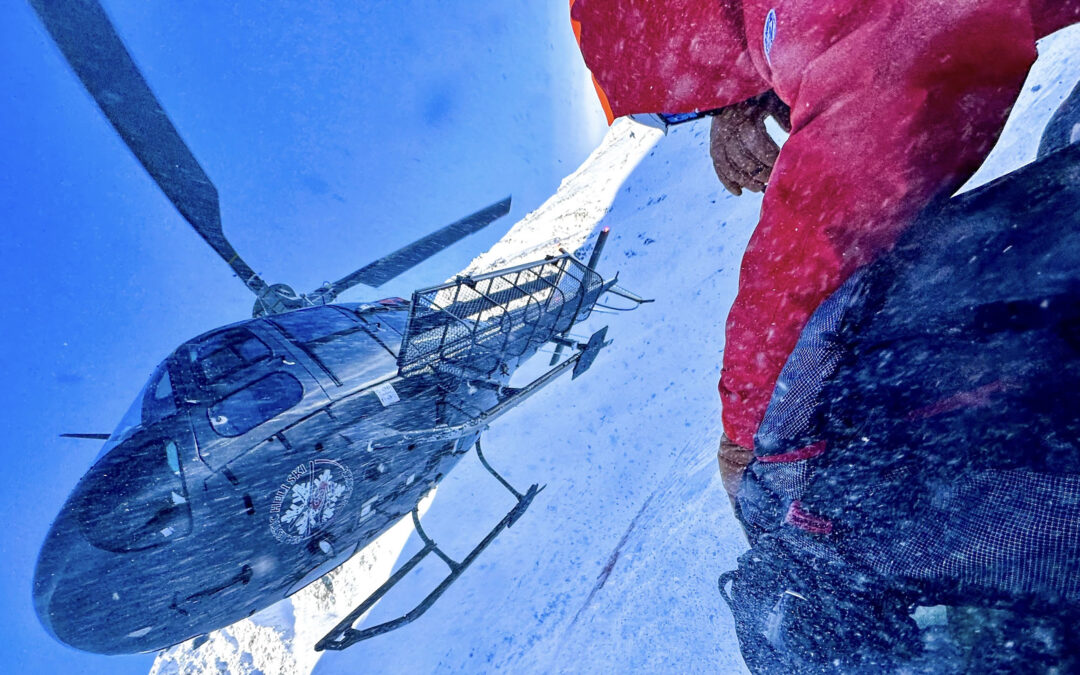
Snow is still whipping into your face, the only sign that a thundering three-thousand-pound machine had been sitting three feet away just moments before. You knew it left. You heard the rotor roar as it lifted off and felt the wind battering harder before it dove over the edge, and then, all at once, it was as if a heavy blanket dropped over the peaks.
Absolute silence.
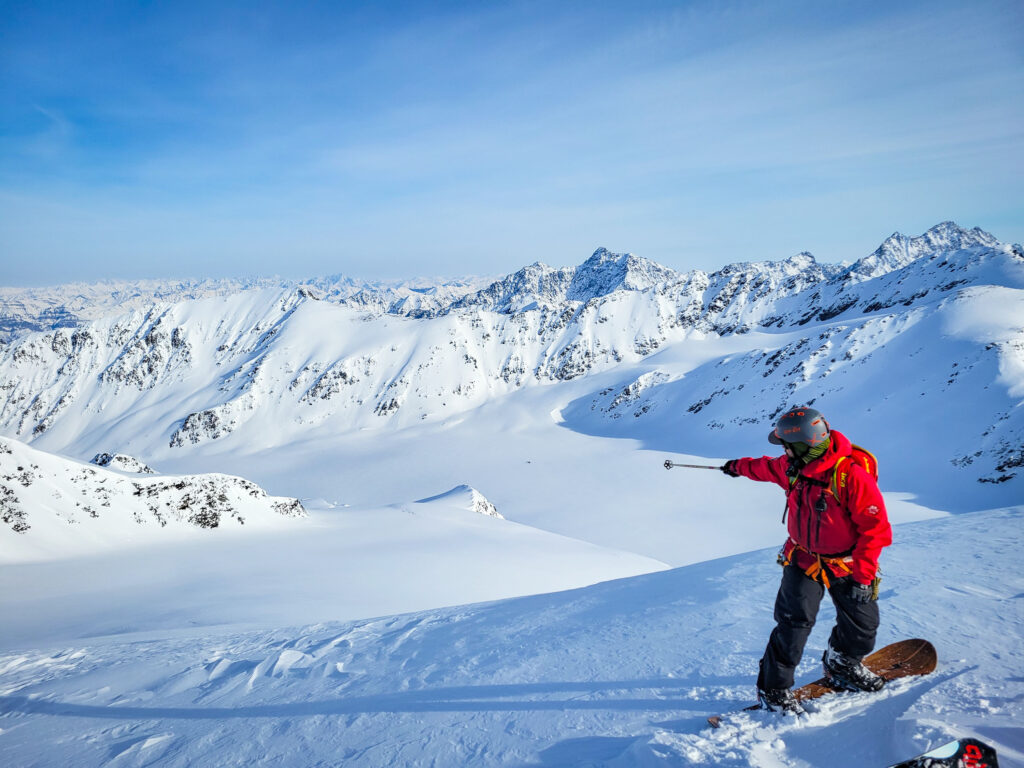
There’s something mysterious about how mountains can swallow every sound except wind on a gusty day. So, you find yourself six thousand feet up in the middle of Alaska’s Chugach Mountains with your small ski group, and no one says anything yet. You just listen, barely move, and take in a panorama of sparkling glaciers, sunlit pinnacles, and unbroken blankets of deep, glistening powder. Before your guide moves into action, before you snap out of it and remember the genuinely wild thing you’re about to do, you feel, for a moment, completely alone in the wild.
This is heli skiing. And it’s about to get better.
There’s no feeling quite like a first heli ski or heli snowboard run. Surfing down the mountain, carving your own line while a halo of untouched powder trails around you. It’s the reason a lot of people say they got into the sport in the first place.
But in the exhilaration of the run, it’s easy to forget that this is Alaska’s backcountry, not a resort, and it’s not something to take lightly without a little preparation. Whether you’re a seasoned backcountry skier who’s waited your whole life for this, or a resort skier here on a spontaneous trip, here are a few things worth keeping in mind before your first run. It’s what I’m glad I paid attention to, and what I wish I’d prepared for better.
1. Take in the view, but not while you’re skiing
There’s a reason to soak in the scenery in those first quiet moments after the helicopter leaves, not while you’re actually skiing.
Guides steer groups clear of the dangers they can see, but not every hazard is visible. Snow conditions in Alaska can be as unpredictable as the weather, so you often don’t know what kind of day you’re in for until you’re already skiing it. Rock pillows and other hazards can sit just below the surface, and in low visibility, sudden drops can appear faster than you’d think. Paying close attention to your guide’s directions matters more than it feels like it should in the moment.
It’s also easy to get lost in the bliss of a run without meaning to. On one of my last runs, I got so focused on following a set of ski tracks that I didn’t realize they’d led me away from my group until I was nearly at the bottom. I rode back over without incident, but it’s a good reminder to stay aware of your surroundings and watch for your guide’s signals. This is their terrain, and their calls are what get you down the best runs safely.
And once you’ve made it down and you’re still riding the high of your first run, take a second to look up and take in the view again.
2. Be honest about your ability, and confident in it
Tell your guide your real skill level, and be honest with yourself about it. Taking on more than you can handle isn’t just risky for you, it’s a risk to the group.
At the same time, if your guide thinks you’re ready for something, trust it. The worst thing a skier can do, in this sport or any other, is start doubting their own ability. Heli skiing isn’t always smooth, and it’s sometimes hard work, but second-guessing yourself doesn’t just take the fun out of it, it pulls your focus away from your reactions and the terrain around you.
If you start feeling uncertain, say so. Your guide might have you sit out a run, and that can end up being one of the best parts of the trip. I skipped my last run after a fall and admitting I was gassed, and it didn’t take anything away from the day. If anything, it added to it. That was the moment I was truly alone in the mountains.
3. Layers, layers, layers
Alaska weather can turn in an instant, from calm and bluebird to a forty mile-per-hour whiteout. It’s better to overdress and shed layers than to be caught short. I kept toe and hand warmers within reach and two neck warmers on hand in case one got soaked with snow, especially near the helicopter.
Try on your full kit before you go, so you know what’s actually necessary and what’s just extra weight. No matter how good the snow is, the cold can ruin the day if you’re not ready for it.
4. Use powder skis or a powder board. No exceptions
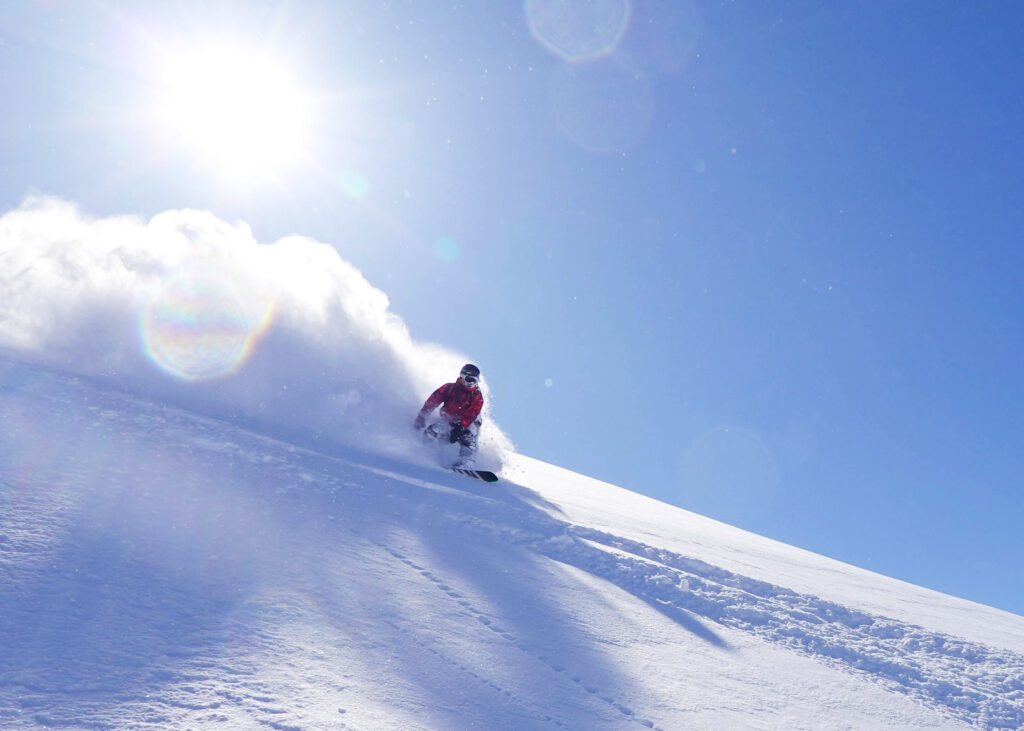
You might get away with all-mountain skis during a powder day at a resort. This isn’t a resort. This snow has never seen a snowcat, and there’s no such thing as a tracked-out run here. Above six thousand feet, the base can run three meters deep or more of completely unpacked snow. When the powder is good, it’s on a different scale than anything you’ll find in-bounds, and you’ll enjoy it far more on gear built to handle it.
One of Majestic’s guides put it well on my trip: you can ski just fine without powder skis at resorts and in most backcountry terrain, but out here, for something like this, you wouldn’t dream of it.
I didn’t use a powder board my first time, and I regret it. I spent more energy fighting the board than enjoying the ride. I still had an incredible day, but next time I’ll know better.
5. Remember why you’re actually here
Some people go heli skiing for themselves and end up skiing for everyone else instead, trying to impress, keep pace, or quietly compete.
As a newer heli snowboarder with a lot less experience than the rest of my group, I felt intimidated on my first run. But I figured out fast that it isn’t a race or a competition. Everyone around me was there for their own version of the best powder of their life, riding at their own level, so I did the same. Ride for yourself, slow down, feel the mountain, and build a run that’s entirely yours.
6. Be ready to be bored by resorts after this
No further explanation needed. After something like this, there’s no real way back.
Ready to have your own first run? See our Alaska heli ski packages and prices →


