
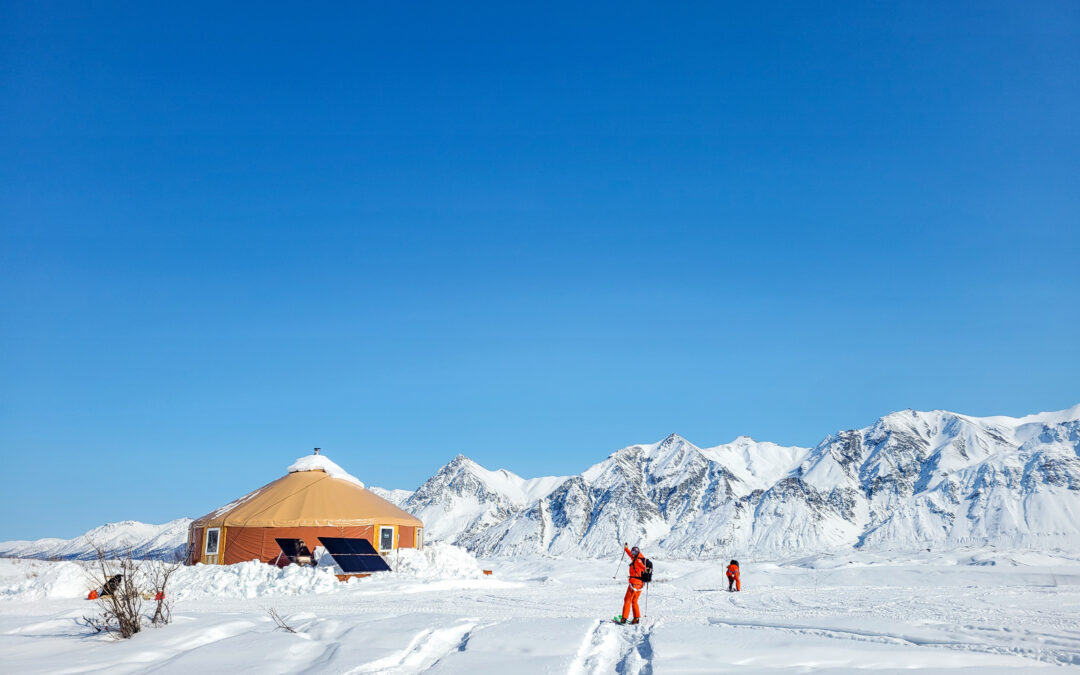
Heli-assisted ski touring pairs a helicopter drop with a day of real backcountry touring: the helicopter skips the long approach and puts you on top of your first peak, and your skins and legs do the rest. Here's what it is, why touring is booming, and how our heli-assisted touring trips in Alaska's Chugach work.
Walk past a ski area parking lot before the lifts open and you'll see it: headlamps bobbing up the groomers, skiers with climbing skins on their skis, steam coming off them in the cold. Ten years ago that was a handful of diehards. Now more than half of North American resorts allow uphill skiing, and touring gear has become one of the fastest-growing categories in ski shops. Snowsports Industries America's latest preview found alpine touring participation up again in 2024–25. Touring skiers also posted the biggest jump in days on snow of anyone in the study.
So what is ski touring, if you've never tried it?
It's skiing where you do the climbing. Touring skis have bindings that free your heel, so you can walk uphill with a natural stride. Climbing skins, strips of grippy fabric, stick to the bottom of your skis so you don't slide backward. You skin up, peel the skins off, lock your heels down and ski back down like any other powder day. Then you do it again.
No lift lines, no tickets, no crowds. Just you, your crew and a mountain.
Why it feels so good
Ask a touring skier why they do it and you'll rarely hear about the descent first. You'll hear about the climb.
There's a rhythm to skinning: step, glide, breathe. The skin track switches back and forth up the slope, your heart rate settles into a steady hum, and the noise in your head goes quiet. It's real exercise, hours of it, but it doesn't feel like a workout. It feels like a long conversation with the mountain.
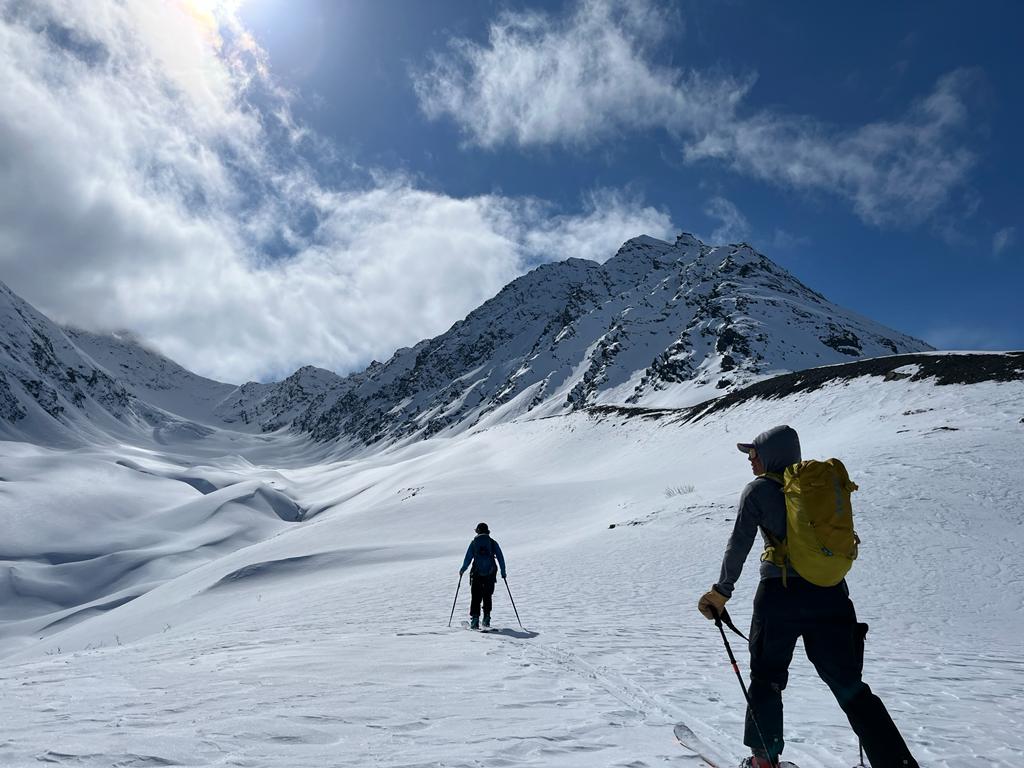
It's good for you, too. A University of Exeter study of nearly 20,000 people found that two hours a week in nature was the point where people reported clearly better health and well-being. A single touring day covers that before lunch.
Then there's what you see. Touring takes you where lifts and roads don't go. The snow is untracked because nobody else is there. The only sounds are your skis, your breathing and the wind over a ridge. You stop to drink water and realize you can see three mountain ranges at once.
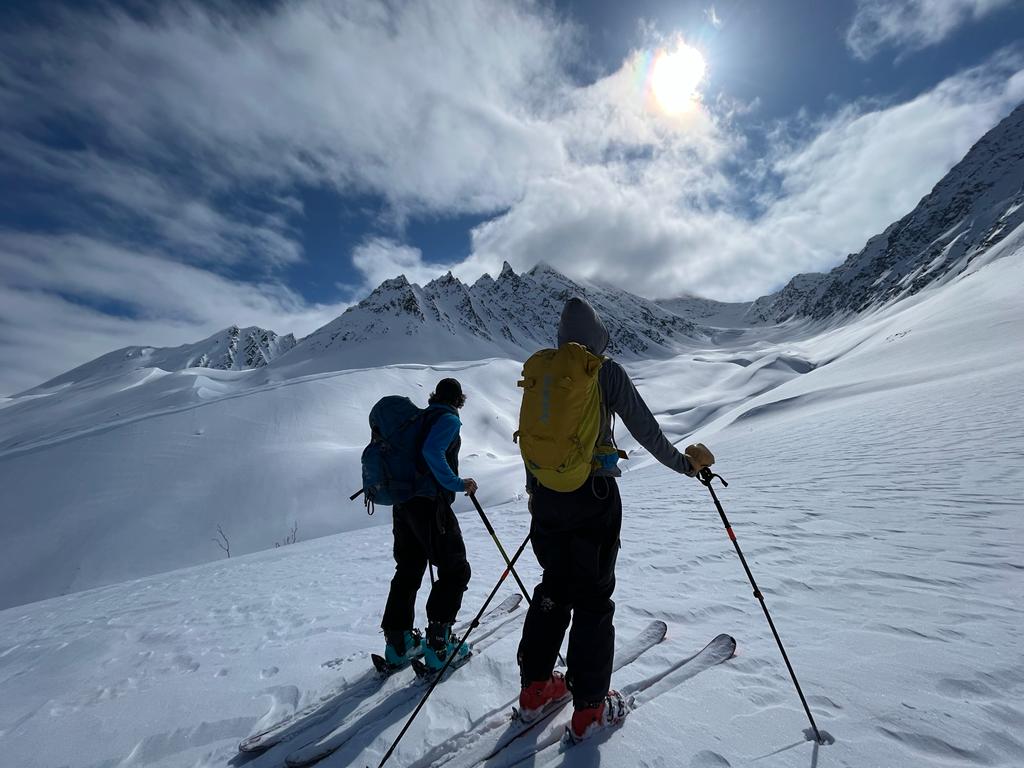
And the run down? You earned every turn, and it shows. Powder skied after an hour of climbing tastes better. Every touring skier will tell you the same thing.
So where does the helicopter come in?
Here's touring's catch: the best terrain is a long way from the car. In big mountains like ours, the approach alone can mean hours of slogging up valley bottoms and through trees under a heavy pack before the real skiing even starts. On foot, the deep terrain is simply out of reach.
Heli-assisted ski touring skips the slog. The helicopter drops you right on top of your first peak, so your day starts with a run from the summit instead of a long walk in. You're deeper in the range than any normal approach could ever take you, in terrain that almost nobody sees.
From there, it's real touring. You ski that first peak, put your skins back on, and climb another peak or two. Then you ski the last run of the day down to the yurt. The helicopter handles the approach, and your legs handle everything after that.
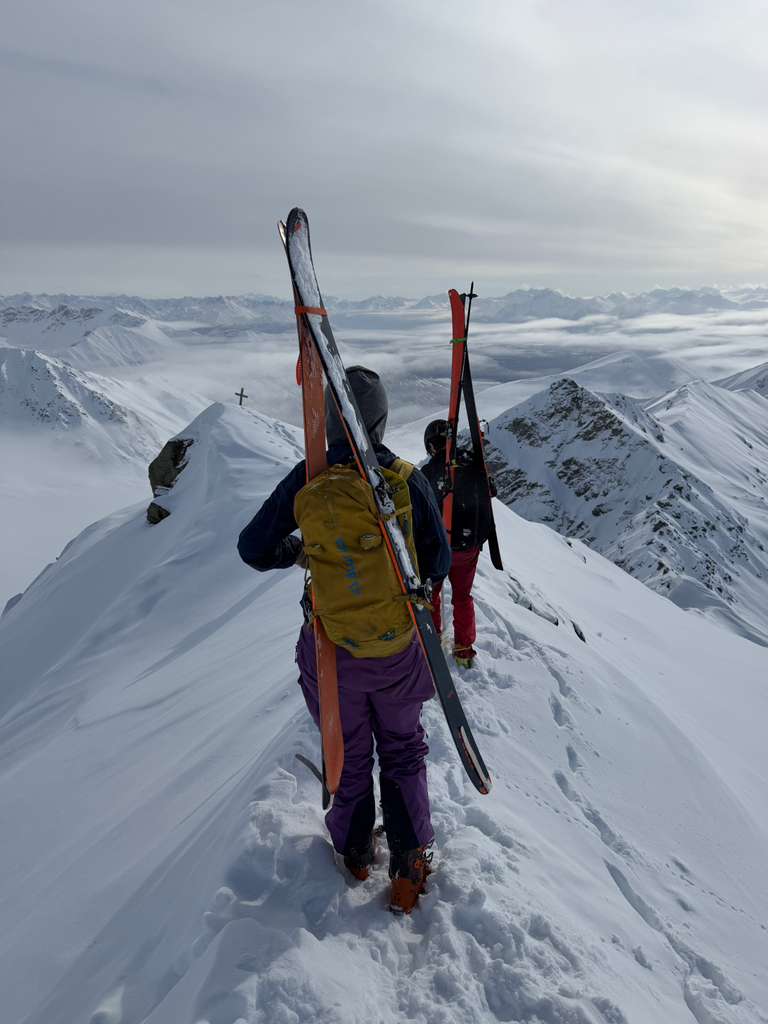
That's the difference from heli-skiing, where the helicopter picks you up at the bottom of every run. Here the climbing is the point. The helicopter just puts you where the climbing is best.
How it works at Majestic
Our touring trips run in the Chugach Mountains, the same range we've heli-skied since 2011. The helicopter does the hard part. From there it's your skins, your legs and your guide, with untracked lines earned one climb at a time.
It starts at Sheep Mountain Lodge on the Glenn Highway. Your guide checks your gear and runs through the plan before anyone flies, and dinner is at the Majestic Heli Ski Lodge.
Then you fly. On the yurt trips, the helicopter drops your group on a first peak in the mountains near the Nelchina Glacier. You ski it, skin up another peak or two, and finish the day skiing down to the yurt. On the touring days after that, when the weather and our other groups allow, the helicopter gives you a bump to fresh terrain.
Your gear is already there. Your overnight gear flies to the yurt while you ski, so all you carry is a day pack. When you ski in, your duffel is waiting, and so is dinner. A yurt keeper lives at the yurt full time as host and cook.
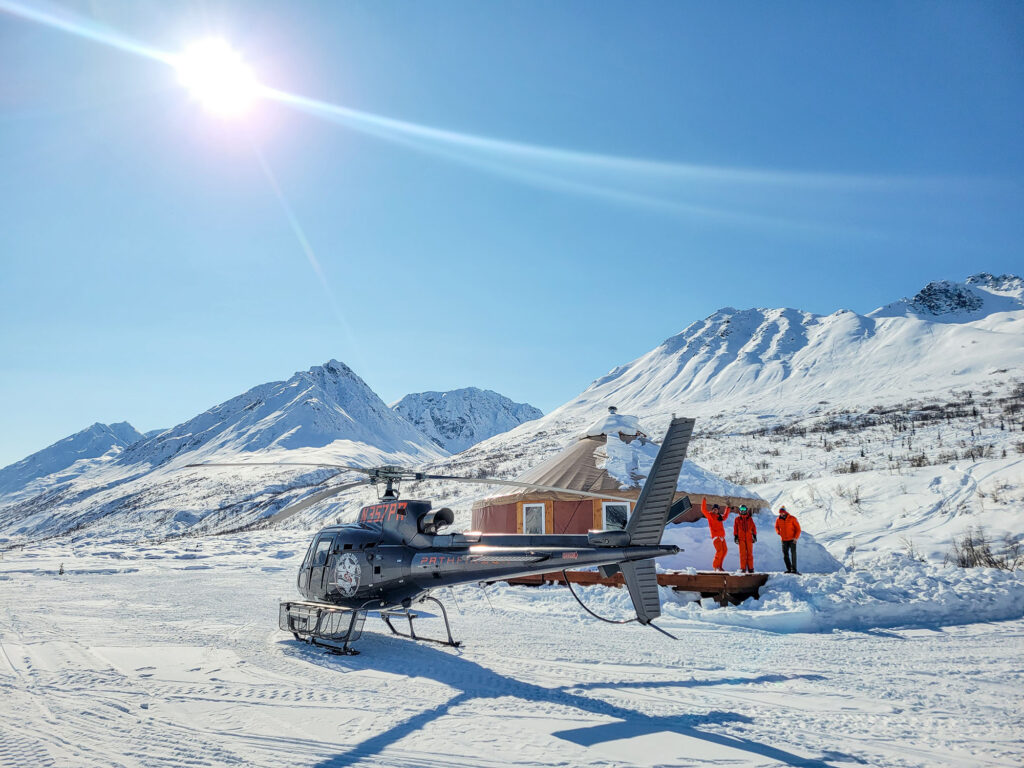
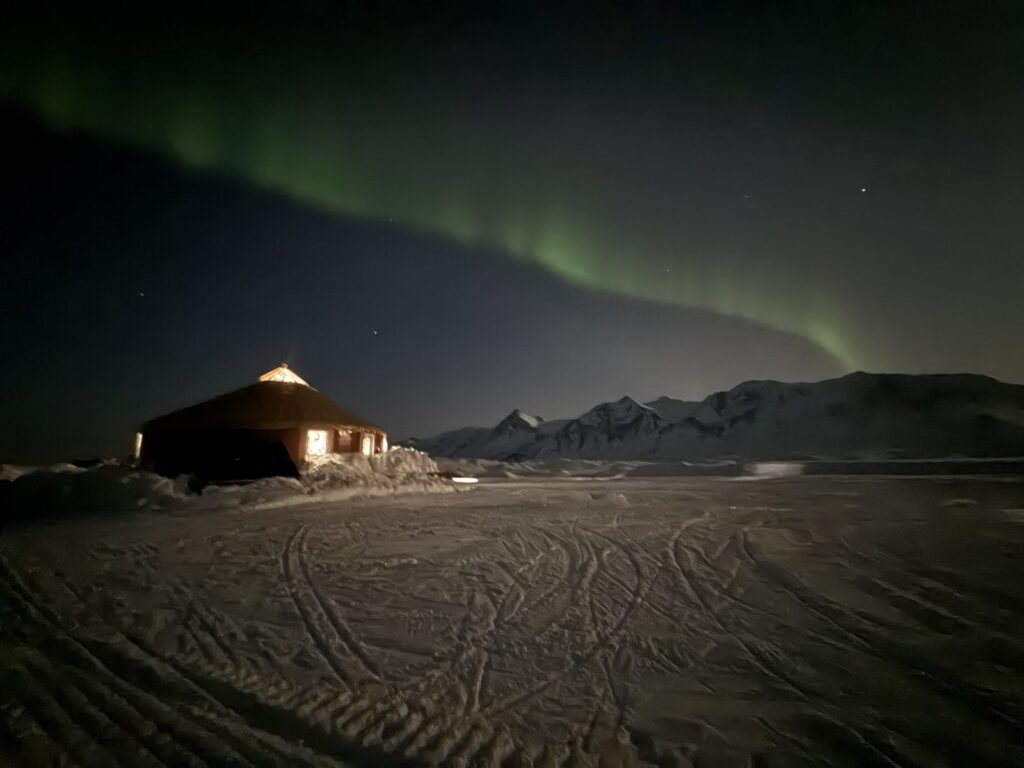
The yurt isn't camping. You sleep on a real mattress with fresh bedding, which makes a big difference to recovery after a day of climbing, and there's no sleeping bag to pack. The wood stove keeps it warm and gives you plenty of room to dry out boots, skins and layers overnight, so you start every morning with dry gear. There's power, Starlink internet and an indoor toilet, so there are no trips out into the cold.
Safety comes first. Every group skis four guests to one guide. Our guides are trained through the AMGA or the Canadian Ski Guide Association, and they're Wilderness First Responders or OEC technicians. Every guest carries a beacon, shovel, probe and an airbag pack, all included. A satellite phone and Starlink keep the yurt in touch with our base. If the weather grounds the helicopter at the end of a trip, we can bring you out by snowmobile and sled.
Who it's for: skiers and splitboarders 18 and older who can ski a black diamond run on a powder day with a pack on. You should be fit enough to climb about 5,000 vertical feet in a day. Your guide sets the pace, and you can climb as much or as little as the group wants. Bring your own touring setup, or rent Blizzard Zero G 105 touring skis with tech bindings and skins for $50 a day.
Three ways to go
We built three trips, from a single big day to a full week that ends with heli-skiing. All three are priced per group, and the price is the same for one to four guests, so the best value is a full crew splitting it four ways.
| Trip | Length | Price per group (up to 4) | Each, with 4 | Best for |
|---|---|---|---|---|
| 1-Day Touring | 1 day | $4,400 | $1,100 | A first taste, or an add-on to a heli-ski week |
| 4-Day Chugach Yurt Experience | Saturday start, 4 days at the yurt | $15,000 | $3,750 | The full touring experience |
| 7-Day Touring + Heli-Ski Combo | Saturday start, 4 touring days + 3 heli-ski days | $15,000 + $6,600 per person heli-ski | $10,350 | Earn your turns, then let the helicopter climb |
1-Day Touring. One day, one helicopter and a whole mountain range to yourselves. The helicopter flies your group into the Chugach, wherever your guide finds the best snow that morning. You tour all day, then the helicopter brings you home.
4-Day Chugach Yurt Experience. Alaska's only heli-accessed yurt touring program. Fly in, ski to the yurt and spend four days touring from the door, with a heli bump to fresh terrain when the weather allows. All of the adventure, none of the slog: no long approach and no heavy pack.
7-Day Touring + Heli-Ski Combo. Four days touring from the yurt, then three days of heli-skiing from the Majestic Heli Ski Lodge. Your legs will be tuned from the climbing, so you'll be ready for lap after lap of Chugach powder. The heli-ski days are priced per person, so the whole crew can stay on, or you can keep going on your own.
All three include your guide, all meals, and avalanche gear with an airbag pack. Trips run March 6 to late April 2027. The 4-Day and 7-Day trips start on seven Saturdays, March 6 through April 17, and each departure takes one group of four, so dates will go fast.
Round up your crew and see the trips. Questions? Call 1-800-559-8691, WhatsApp us, or email info@majesticheliski.com.
