
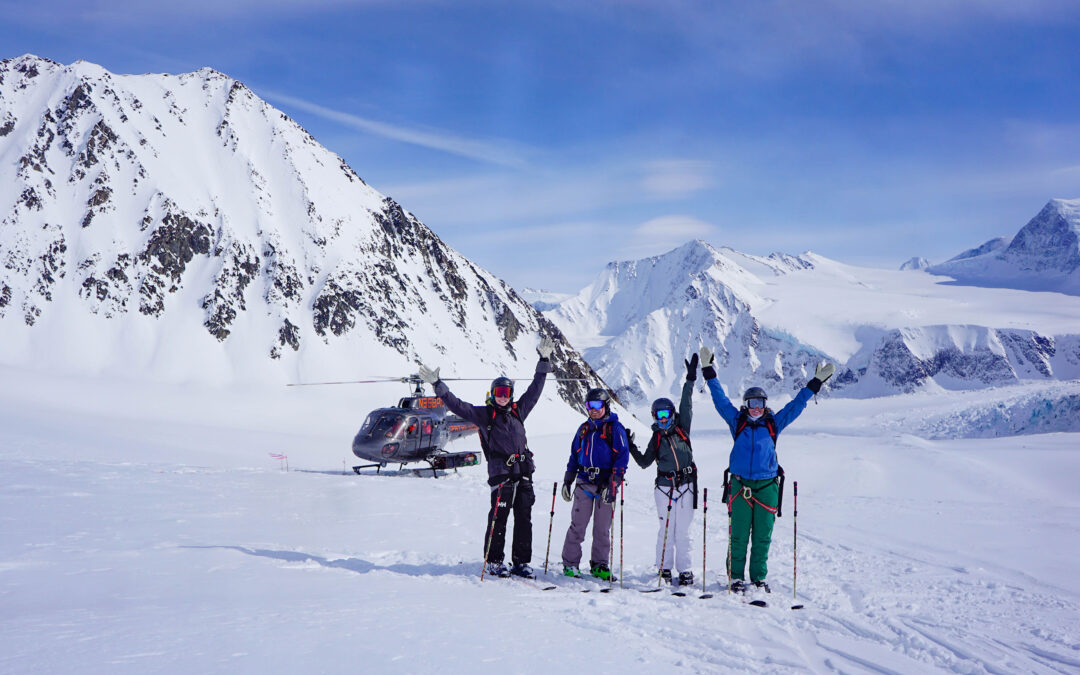
If you’ve never done it before, heli skiing can sound intimidating. A helicopter drops you on a mountain with no lift, no groomed run, and no one else’s tracks in sight. It’s a fair reaction. It’s also not the full picture. Most first-time guests find that the parts that felt scariest going in, the helicopter, the ungroomed terrain, the idea of being “on your own” out there, are the parts Majestic has built the most structure around.
Here’s what an actual first trip looks like, so you know what you’re walking into.
Do you need experience?
You don’t need prior heli skiing experience specifically. What you do need is solid intermediate to advanced skiing or riding ability, since the terrain is ungroomed and often deep, and you’ll be skiing it in a small group with others of similar ability. If you’re comfortable in variable snow and steeper terrain at a resort, you’re likely ready. If you’re not sure, it’s worth a quick conversation with our team before you book.
The safety side comes first
Before anyone gets near a helicopter, every guest goes through an orientation covering what to expect during the stay, followed by hands-on training. That includes avalanche and mountain hazard awareness, a walkthrough of the safety and rescue gear you’ll be carrying, companion rescue technique, skiing protocols, and a separate aircraft briefing on helicopter procedures.
Majestic’s guides are certified or trained through the American Mountain Guides Association (AMGA), the Canadian Ski Guide Association (CSGA) and/or the Heli Ski US Association. They’re also certified or trained in professional avalanche operations through the American Institute for Avalanche Research and Education (AIARE) and/or the Canadian Avalanche Association, and every guide has medical training as a Wilderness First Responder, Outdoor Emergency Care technician or EMT. On top of that, the team runs a dedicated snow safety program every day guests fly. That means field observations, snowpack tests, and weather tracking happen before anyone decides where it’s safe to ski that day. Your guide’s job is to read the mountain in real time and choose terrain based on what’s actually stable, not what looks good from the lodge.
Who you’ll be skiing with
Safety is the standard every Majestic guide has to meet. Beyond that, what guests often remember is the people.
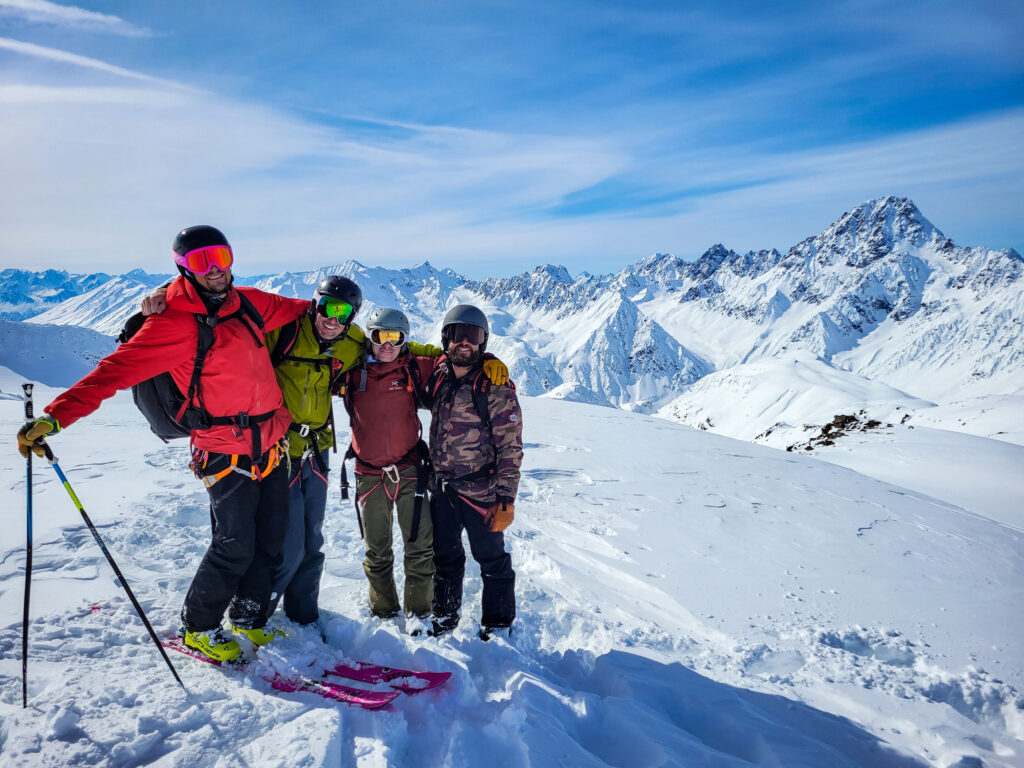
Matt and Drew tend to keep things light with their sense of humor. Sara and Tree are good for a story or two about a memorable run or season. Shannon and Tanner will sometimes bring the guitars out after dinner. Patrick, Jimmy, and Lee have skied in plenty of corners of the world and are happy to talk about it if you’re curious, and Lee also guides our summer season in Argentina. Dave Van Ham is good for a story about his dog Revvy and the adventures they’ve gotten into together. And if the conversation turns to close calls in the mountains, Alan has a few rescue stories worth hearing.
It’s a small part of the trip, but it’s part of why guests come back. You’re spending a week with a team that’s good at the job and easy to be around.
What a day actually looks like
Most first-timers assume heli skiing means a handful of quick runs and a long wait between them. At Majestic, it’s the opposite. The operation runs on an unlimited vertical model, which means your day is shaped by weather, daylight, and your guide’s judgment rather than a fixed run count. If conditions are good, you keep skiing. There’s no meter running and no cap decided in advance.
Between runs, you’re back at the helicopter within minutes, not sitting around waiting on logistics. The pace surprises most new guests, in a good way.
What’s included, and what to bring
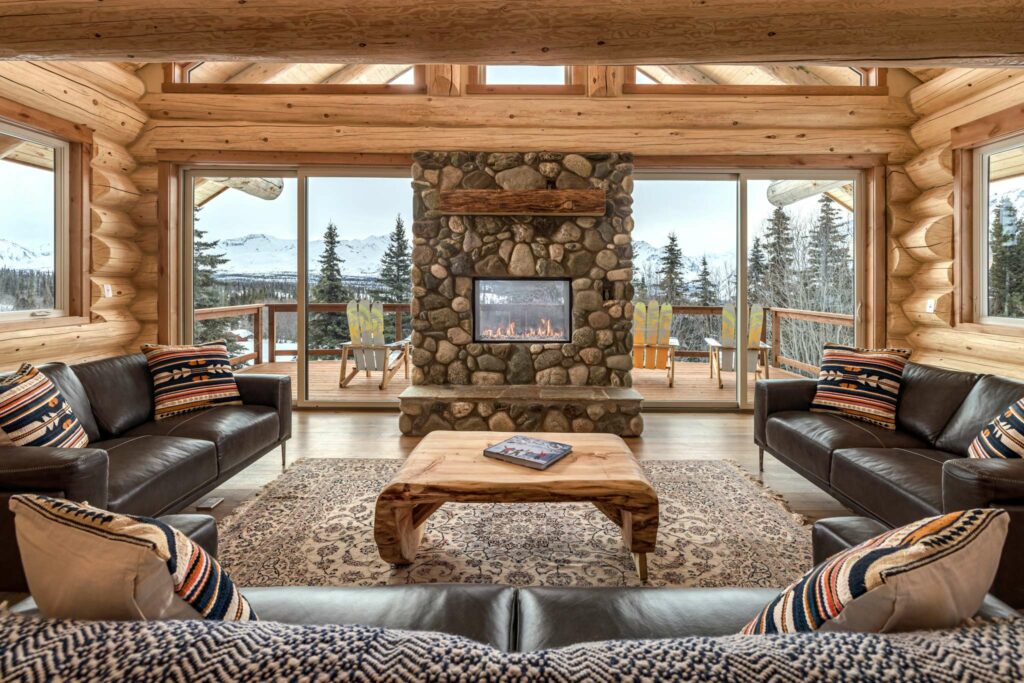
Majestic provides your skis, poles, bindings, and all avalanche and crevasse rescue gear, sourced from K2 and BCA and covered in your safety training. Lodging and meals are included on every multi-day package, along with morning yoga and access to a skiing-specific massage if you want to book one.
The one thing we can’t provide is boots. Bring your own ski or snowboard boots, and carry them onto the plane rather than checking them, since a lost boot bag can end a trip before it starts.
What it costs
Day trips start at $2,000 and include 10,000 feet of guided vertical, with additional vertical available at $100 per 1,000 feet. Multi-day, all-inclusive packages run $7,200 for three days, $9,600 for four days, and $16,800 for seven, with guiding, lodging, meals, and gear all included. Every tier is priced and published, so you can plan around real numbers instead of waiting on a quote.
The honest version
Your first run out of the helicopter will probably feel like a lot. New terrain, new snow, a guide you just met an hour ago. By the second or third run, most guests stop thinking about any of that and start thinking about how soon they can come back. That’s the part that’s hard to explain until you’ve done it, and it’s the reason most first-time guests aren’t first-time guests for long.
Ready to plan your first trip? See our Alaska heli ski packages and prices →


